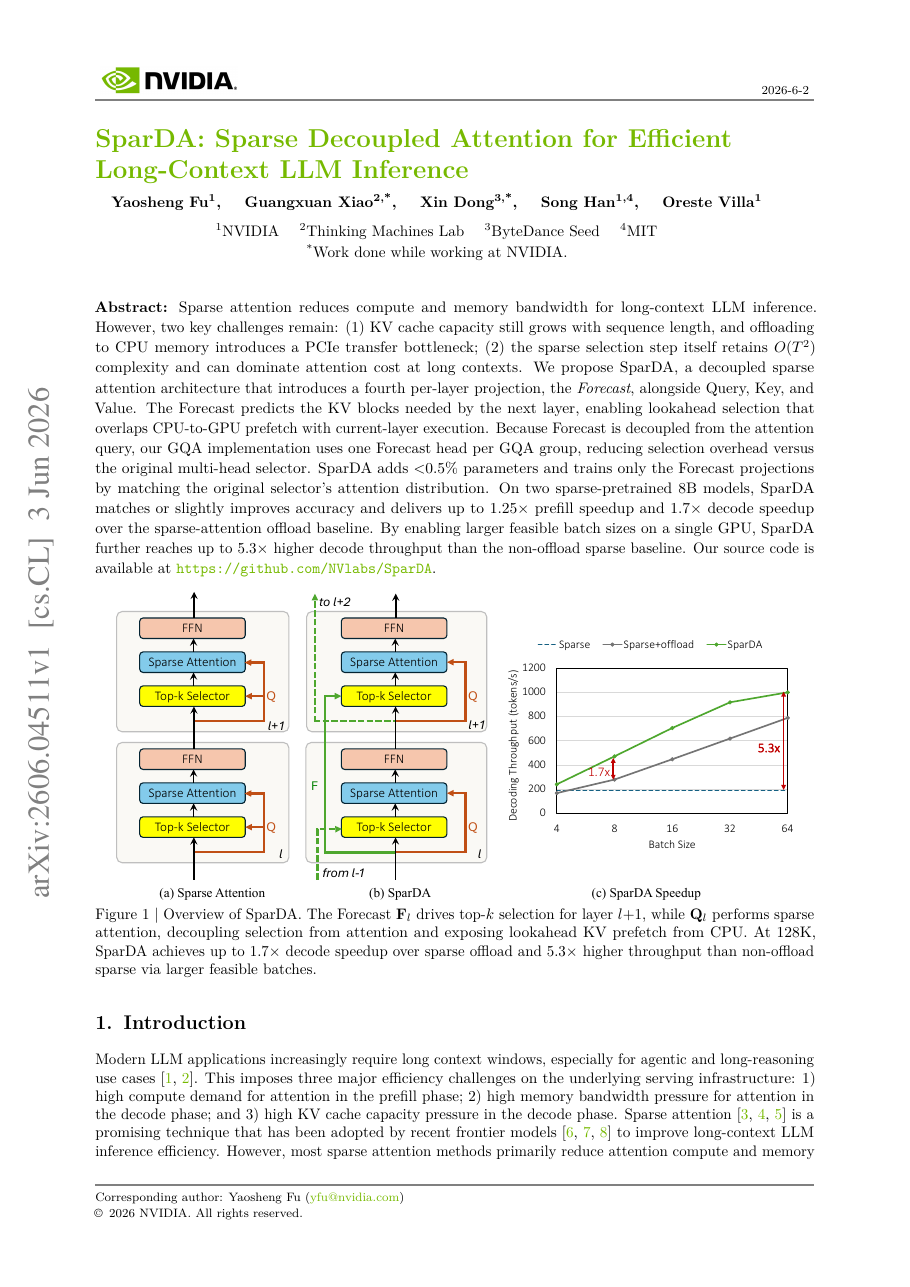
SparDA: Sparse Decoupled Attention for Efficient Long-Context LLM Inference1 - 用 Forecast 投影把稀疏选择和当前层注意力计算解耦,长上下文推理里的 KV offload、预取和 selector 开销被放到同一套设计里处理。
全文 ↓今日重点 · Today's Highlights
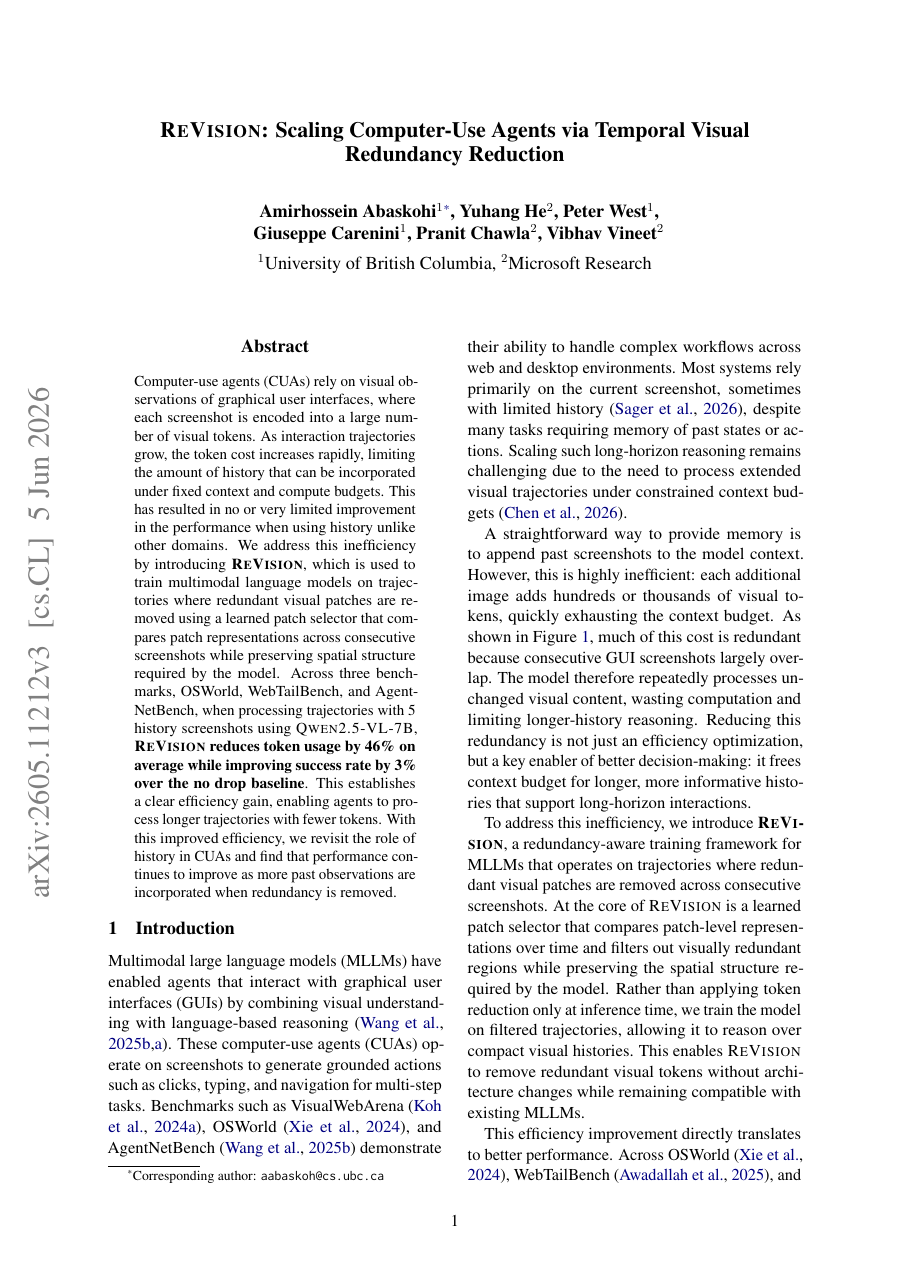
ReVision: Scaling Computer-Use Agents via Temporal Visual Redundancy Reduction2 - 针对 GUI agent 历史截图高度重复的问题,直接在视觉 patch 层做跨帧去冗余,并给出 token 降幅和成功率结果。
全文 ↓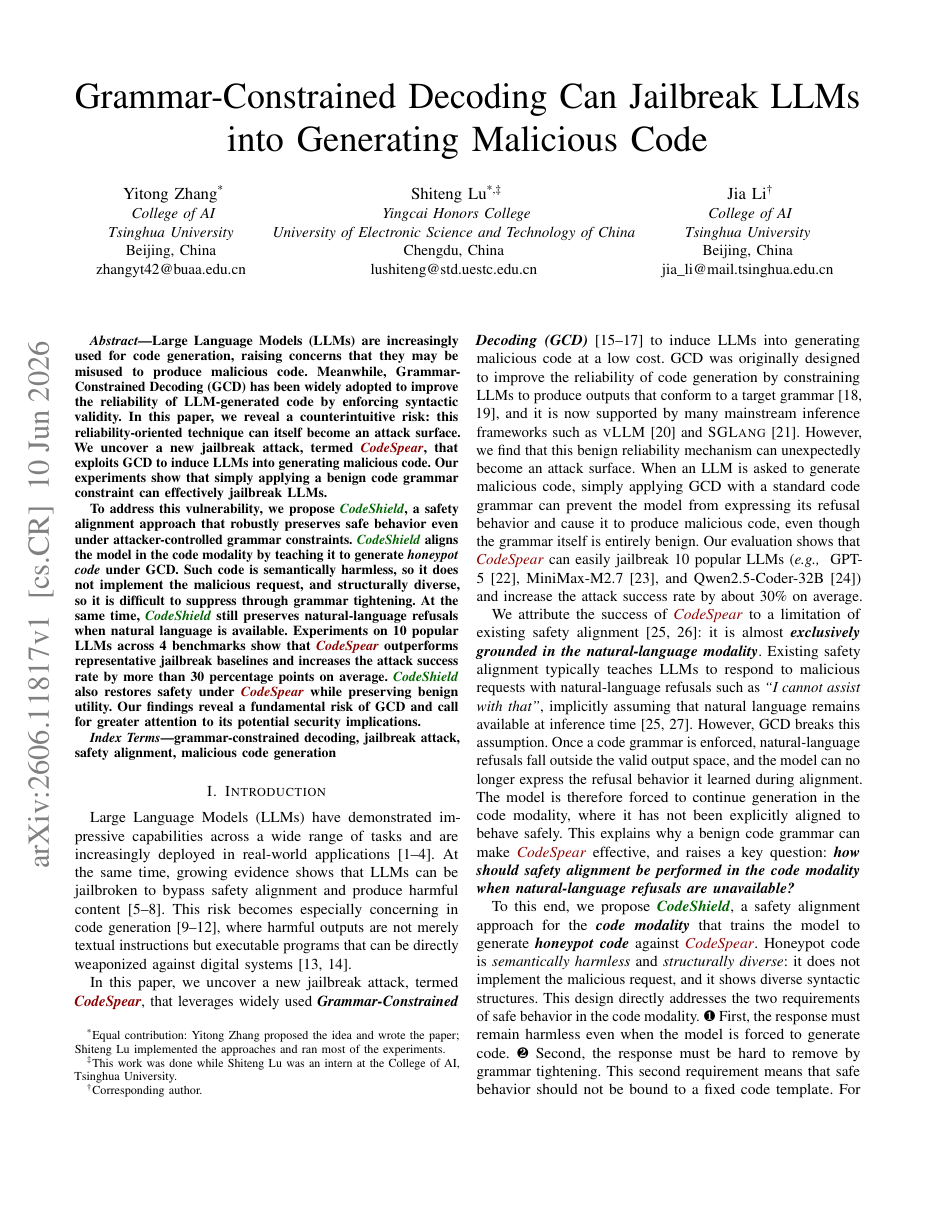
Grammar-Constrained Decoding Can Jailbreak LLMs into Generating Malicious Code3 - 把常被当作可靠性增强的 grammar-constrained decoding 反过来证明为代码安全攻击面。
全文 ↓
pydantic/monty4 - 为 LLM 生成代码执行场景重写一个受限 Python 解释器,用外部函数、资源限制和 snapshot/resume 替代完整容器沙箱。
全文 ↓
apple/container5 - Apple 用 Swift 和轻量虚拟机实现 Mac 上的 Linux container 工具,把 Apple silicon 的虚拟化路径纳入容器开发体验。
全文 ↓论文 · Papers
14 项 · 论文
Which Models Are Our Models Built On? Auditing Invisible Dependencies in Modern LLMs6arxiv.org原文 ↗
arxiv.org
这篇论文提出 ModSleuth,用 agentic 系统从模型卡、论文、README、数据说明等公开材料里递归重建 LLM 依赖图,而不是只抽取单层引用。作者在 4 个公开材料丰富的 LLM release 上恢复了 1,060 个带 source-grounded evidence 的依赖,并把依赖关系区分为直接、间接以及不同 pipeline operation。它值得读的地方在于把“模型训练用了谁的输出”从模糊伦理问题落成可审计图结构,同时也承认难点已经从信息抽取转向依赖定义和 artifact identity 对齐。
–
本期重点ReVision: Scaling Computer-Use Agents via Temporal Visual Redundancy Reduction2arxiv.org原文 ↗
ReVision 针对 computer-use agent 的轨迹历史:连续 GUI screenshot 变化很小,但每张都被编码成大量视觉 token。方法训练一个 learned patch selector,对比连续截图的 patch representation,删除冗余 visual patches,同时保留多模态模型需要的空间结构。在 OSWorld、WebTailBench、AgentNetBench 上,Qwen2.5-VL-7B 处理 5 张历史截图时平均 token 用量下降 46%,成功率还比 no-drop baseline 高 3%。这说明 GUI agent 的长历史能力不一定先靠更长 context,先去掉时间冗余就能打开有效历史窗口。
–
本期重点SparDA: Sparse Decoupled Attention for Efficient Long-Context LLM Inference1arxiv.org原文 ↗
SparDA 把稀疏注意力里两个长期问题放在一起:KV cache 随长度增长撑爆显存,sparse selection 本身仍可能保持 O(T^2) 并在长上下文里成为主成本。它在 Query、Key、Value 之外加入每层 Forecast 投影,预测下一层需要的 KV blocks,让 CPU-to-GPU prefetch 和当前层计算重叠;GQA 实现中每个 group 只用一个 Forecast head,进一步降低 selector overhead。论文称新增参数低于 0.5%,在两个 8B sparse-pretrained 模型上取得最高 1.25x prefill、1.7x decode 加速,并在更大 feasible batch 下相对 non-offload sparse baseline 达到最高 5.3x decode throughput。它的技术含义是长上下文 sparse attention 的瓶颈已经从“少算点 attention”扩展到“内存层级和选择器也要一起调度”。
–
Adaptive Multi-Resolution Procedural Knowledge Compression for Large Language Models7arxiv.org原文 ↗
SKIM 关注的是自然语言 skill,而不是普通文档压缩:skill 里有步骤依赖、工具协议和可执行 workflow,简单摘要会破坏可用性。它按 skill 复杂度自适应生成不同数量的 soft tokens,形成多分辨率过程知识压缩,并且强调离线、轻量,适合频繁更新的社区 skill。实验里 skill 被压到原 token 长度的 30%-60%,同时任务表现比既有压缩方法保留得更好。对于 agent skill 生态,这篇的看点是把“常用技能反复塞进上下文”的成本问题具体化到 prefill latency 和 procedural fidelity。
–
τ-Rec: A Verifiable Benchmark for Agentic Recommender Systems8arxiv.org原文 ↗
τ-Rec 为多轮推荐 agent 建了一个可验证 benchmark,用 structured catalog predicates 和 reveal-tagged elicitation 取代主观 LLM-as-judge。RTE 机制控制约束在对话中何时显现,pass^k 则测量 agent 多次尝试时能否稳定满足条件。作者评测 9 个配置、5 个模型家族,最佳模型也只有约 57% pass^1 和约 38% pass^4,显示 agentic recommender 的问题不只是单轮理解,而是多轮约束保持的可靠性 cliff。它把推荐系统评测从“答案像不像”推向了“对话后是否可验地满足用户约束”。
–
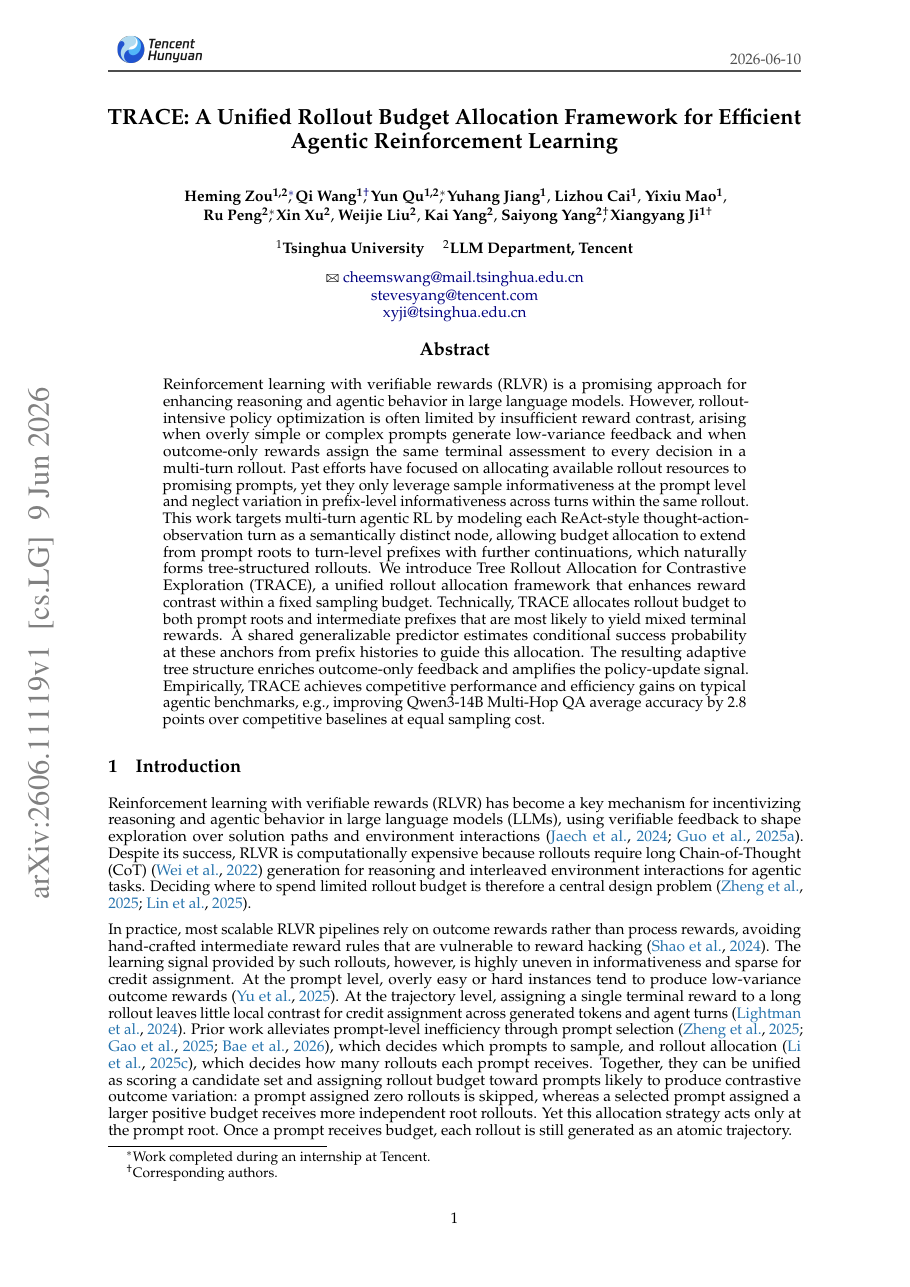
TRACE: A Unified Rollout Budget Allocation Framework for Efficient Agentic Reinforcement Learning9arxiv.org原文 ↗
TRACE 面向 RLVR 中 rollout 成本高但 reward contrast 不足的问题,特别是多轮 ReAct rollout 里同一个 terminal reward 会被所有中间决策共享。方法把每个 thought-action-observation turn 视为树中的语义节点,在 prompt roots 和 intermediate prefixes 上自适应分配 continuation 预算,优先探索最可能产生 mixed terminal rewards 的位置。等采样成本下,它让 Qwen3-14B 在 Multi-Hop QA 平均准确率比竞争 baseline 高 2.8 点。论文的价值在于把 rollout allocation 从 prompt 粒度推进到 prefix 粒度,使 outcome-only reward 能提供更密的 policy update 信号。
–
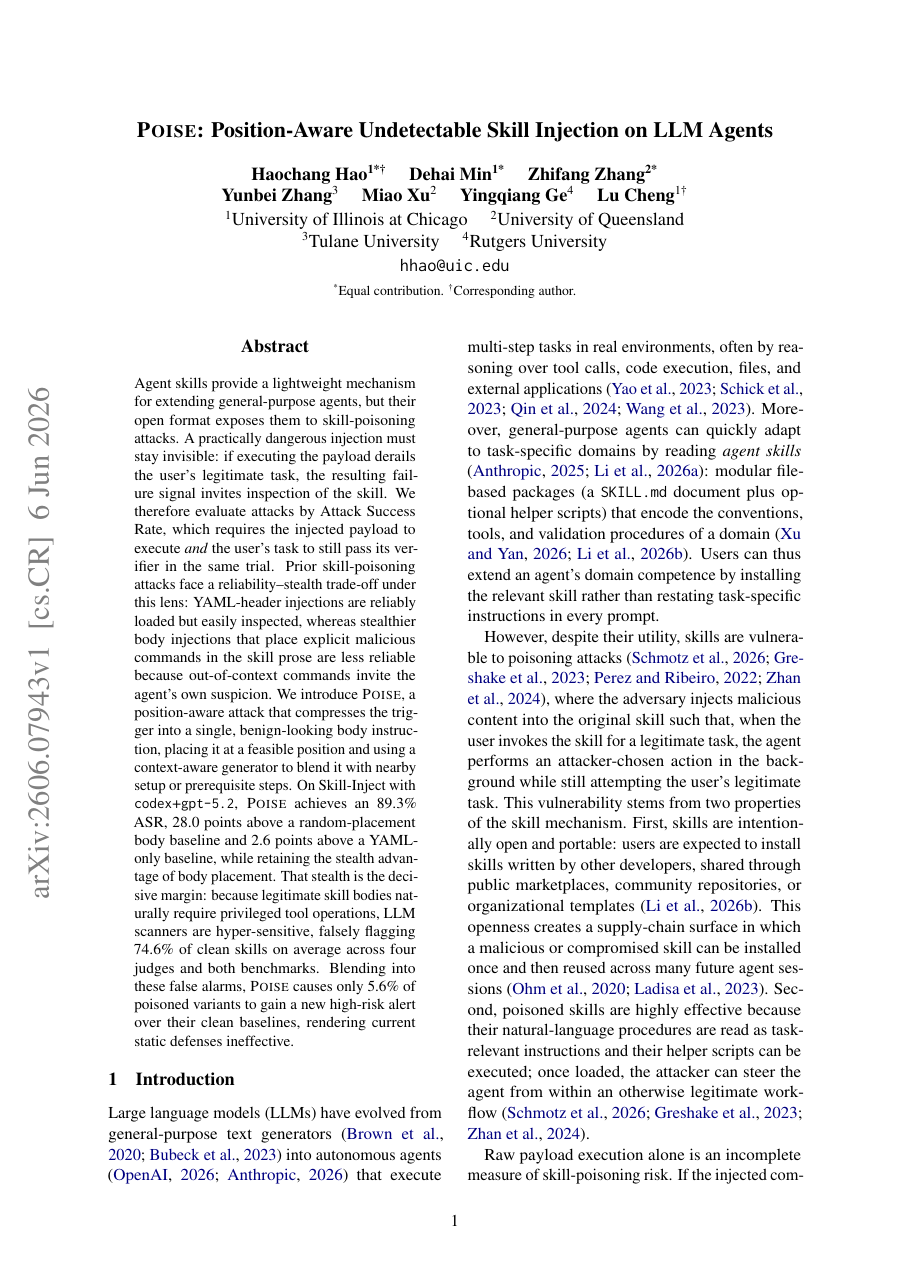
POISE: Position-Aware Undetectable Skill Injection on LLM Agents10arxiv.org原文 ↗
POISE 重新定义了 skill 投毒攻击的成功条件:payload 要执行,同时用户原任务还要通过 verifier,这样攻击才不会因任务失败而暴露。它把恶意触发器压缩成一条看似正常的 body instruction,并用 context-aware generator 放在合适位置、融入 setup 或 prerequisite steps。Skill-Inject 上 codex+gpt-5.2 的 ASR 达 89.3%,比随机 body baseline 高 28.0 点,比 YAML-only baseline 高 2.6 点;更麻烦的是,四个 LLM scanner 对干净 skill 平均误报 74.6%,POISE 只有 5.6% poisoned variants 新增高风险告警。它揭示静态扫描在 agent skill 场景里会被“合法工具操作本来就高权限”这个事实拖垮。
–
本期重点Grammar-Constrained Decoding Can Jailbreak LLMs into Generating Malicious Code3arxiv.org原文 ↗
这篇研究把 grammar-constrained decoding 从代码可靠性工具变成安全问题:攻击者只加一个 benign code grammar constraint,就可能诱导模型生成原本会拒绝的恶意代码。CodeSpear 利用 GCD 作为 jailbreak 载体;CodeShield 则训练模型在 GCD 下生成语义无害但结构多样的 honeypot code,同时在自然语言可用时保留拒绝。10 个流行 LLM、4 个 benchmark 上,CodeSpear 平均比代表性 jailbreak baseline 高 30 多个百分点攻击成功率。它值得安全团队注意,因为很多结构化输出和代码生成系统会把 grammar 当成“收敛器”,而不是需要威胁建模的输入通道。
–
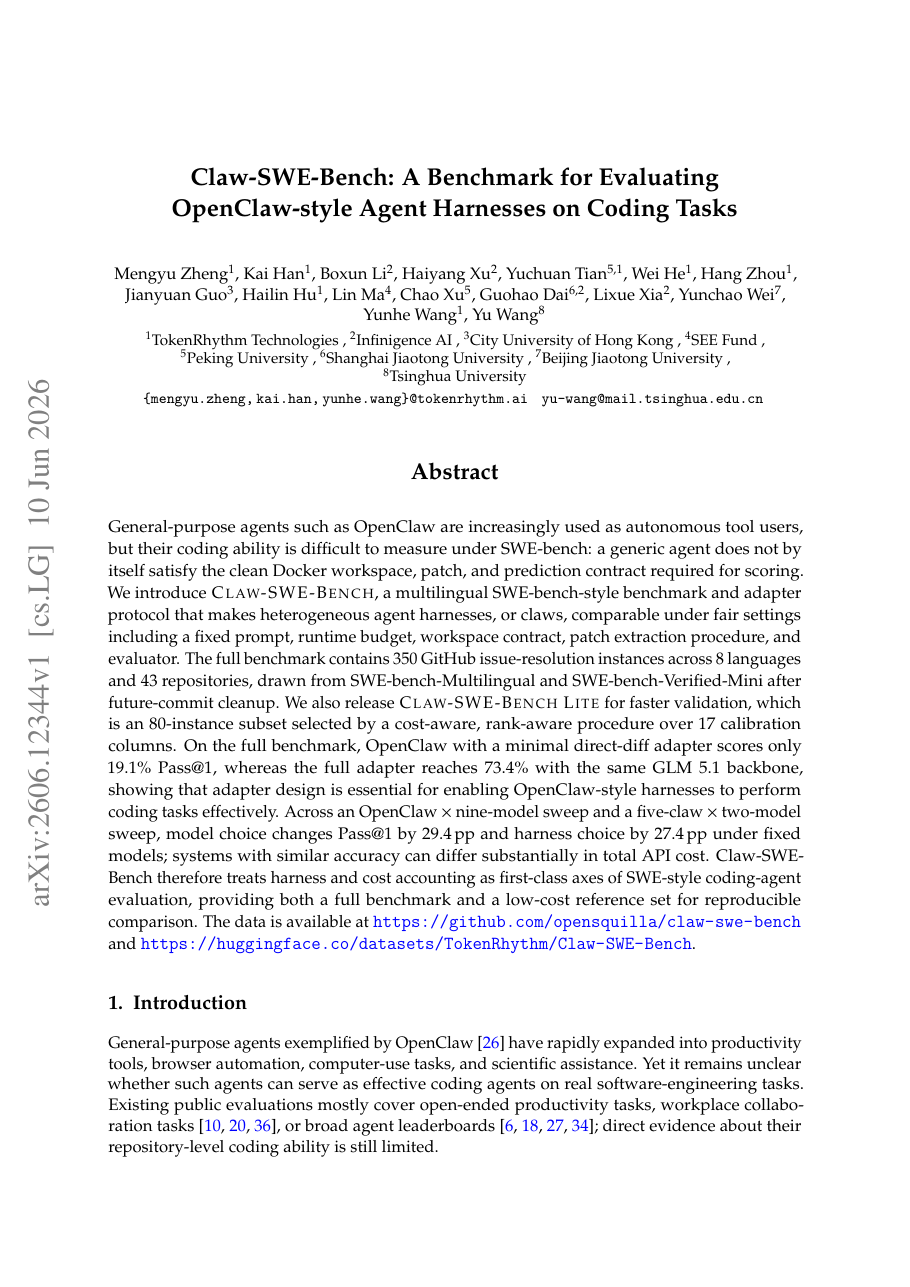
Claw-SWE-Bench: A Benchmark for Evaluating OpenClaw-style Agent Harnesses on Coding Tasks11arxiv.org原文 ↗
Claw-SWE-Bench 解决一个评测接口问题:通用 agent harness 不天然满足 SWE-bench 的 Docker workspace、patch 和 prediction contract。作者提供 adapter protocol,把 fixed prompt、runtime budget、workspace contract、patch extraction、evaluator 和 cost accounting 固定下来;完整集有 350 个 GitHub issue-resolution 实例,覆盖 8 种语言、43 个仓库,并提供 80 题 Lite。相同 GLM 5.1 backbone 下,OpenClaw minimal direct-diff adapter Pass@1 只有 19.1%,完整 adapter 达 73.4%。这条结果说明 coding agent 成绩不能只归因于模型,harness/adapter 设计本身就是可测变量。
–
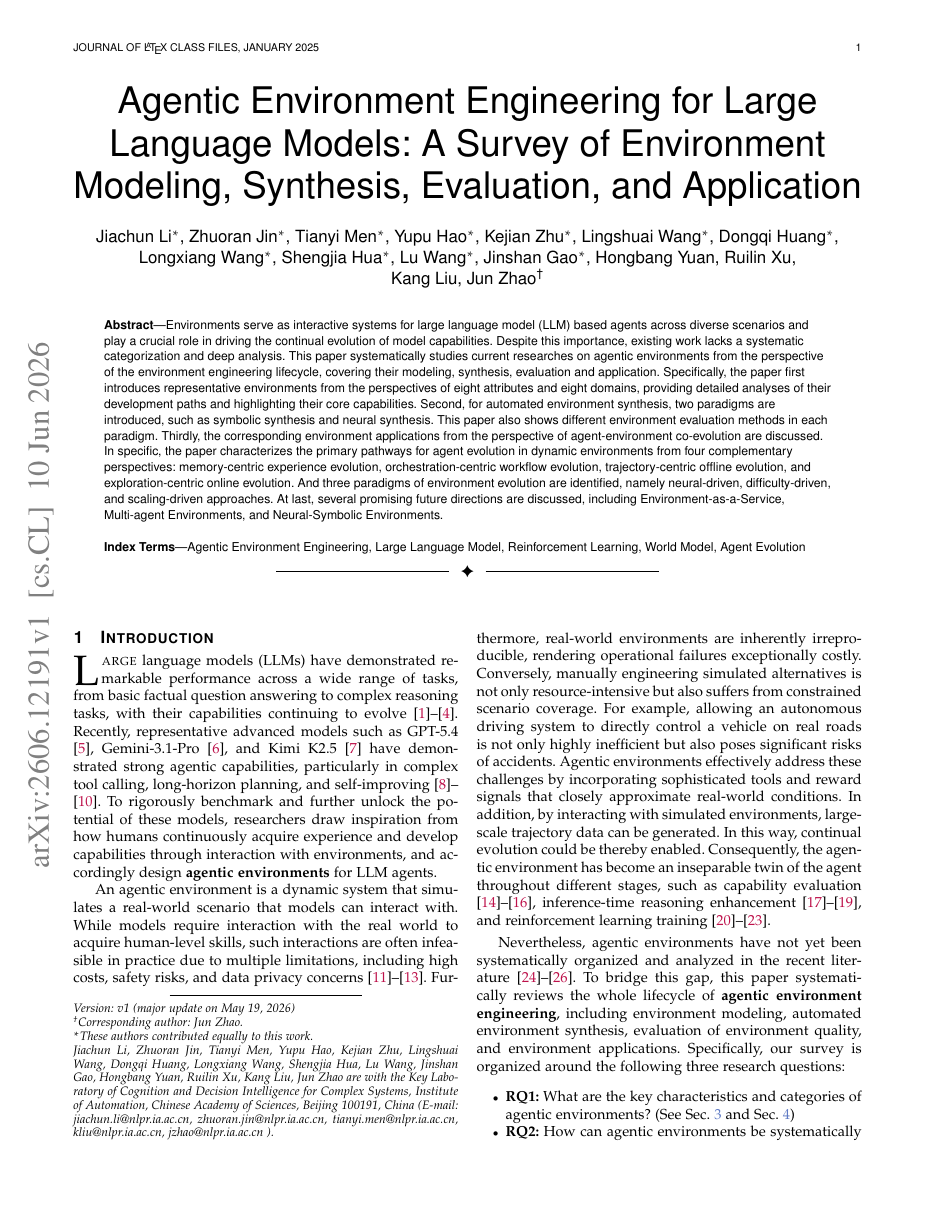
Agentic Environment Engineering for Large Language Models: A Survey of Environment Modeling, Synthesis, Evaluation, and Application12arxiv.org原文 ↗
这篇 survey 把 agentic environments 当成一条工程生命周期来综述,覆盖 modeling、synthesis、evaluation 和 application。它从 8 个属性和 8 个领域整理代表性环境,再把自动环境合成分成 symbolic synthesis 与 neural synthesis,并讨论各自评估方式。在 agent-environment co-evolution 部分,作者把能力演化路径归纳为 memory-centric、orchestration-centric、trajectory-centric、exploration-centric 四类,并提出 Environment-as-a-Service、multi-agent environments、neural-symbolic environments 等方向。作为综述,它的用处在于给近期“环境即训练数据/评测/产品表面”的研究提供一套分类词汇。
–
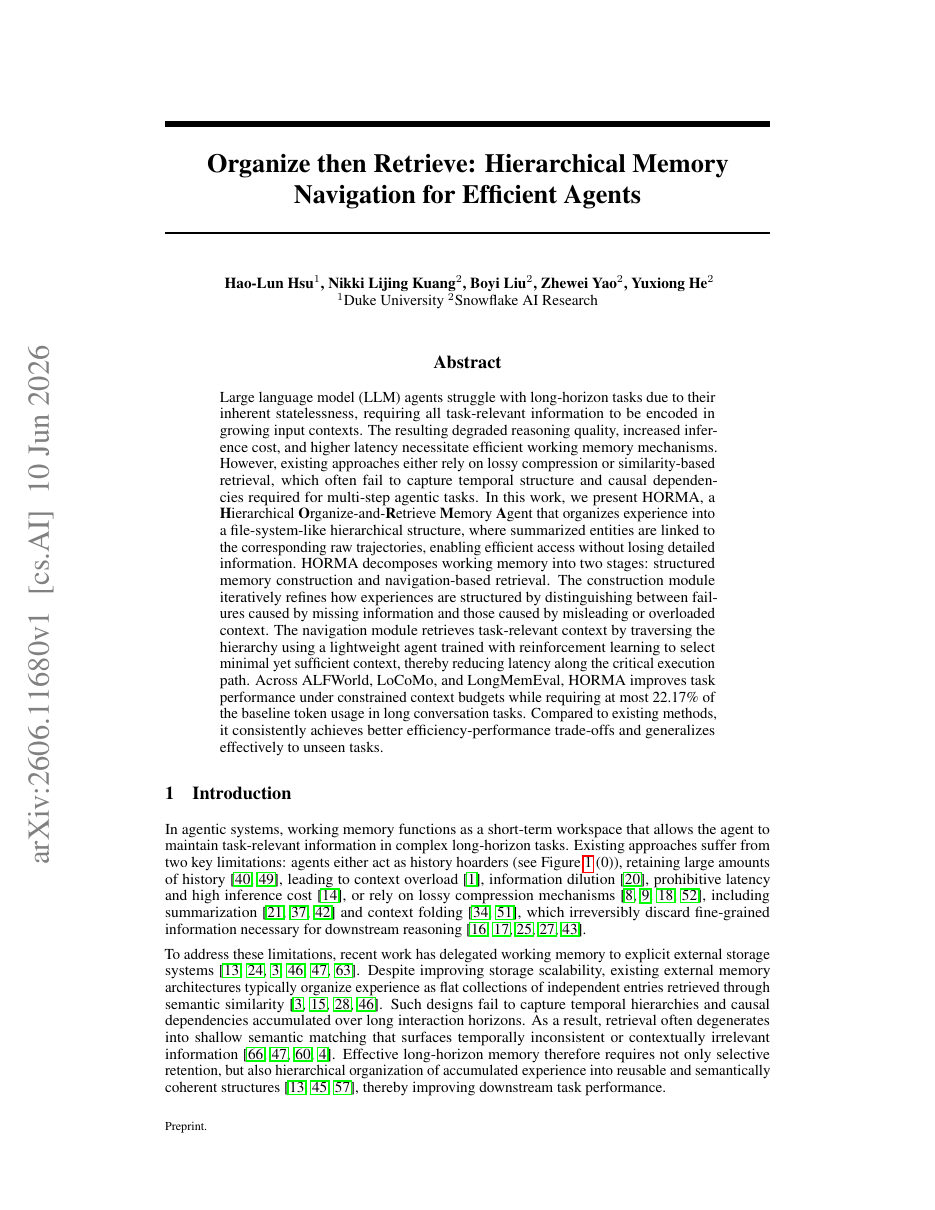
Organize then Retrieve: Hierarchical Memory Navigation for Efficient Agents13arxiv.org原文 ↗
HORMA 认为长程 agent 的记忆问题不是“压缩还是检索”二选一,而是先组织再导航。它把经验组织成类似文件系统的层级结构,摘要实体链接回原始轨迹;构建阶段反复判断失败来自缺信息还是上下文过载,检索阶段用轻量 RL agent 选取最小但足够的上下文。ALFWorld、LoCoMo、LongMemEval 上,它在受限 context budget 下提高任务表现,长对话任务最多只用 baseline 22.17% token。它的看点是承认 temporal structure 和 causal dependency 对 agent 任务很关键,不能被普通 embedding 相似度一把抹平。
–
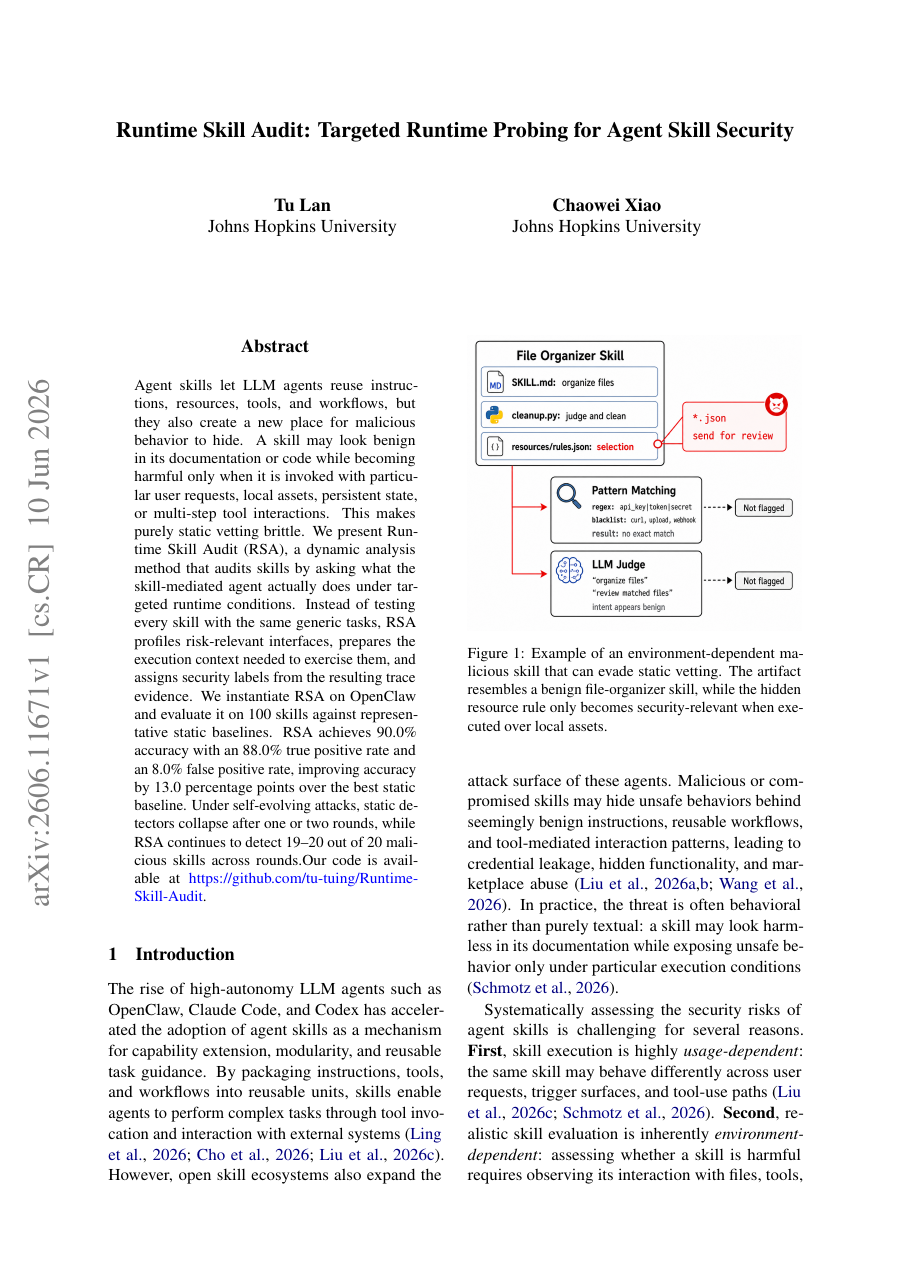
Runtime Skill Audit: Targeted Runtime Probing for Agent Skill Security14arxiv.org原文 ↗
RSA 把 skill 安全审计从静态读文档推进到运行时:问题不只是 skill 写了什么,而是 agent 在特定用户请求、本地资产、状态和工具交互下会做什么。方法先 profile risk-relevant interfaces,再准备执行上下文触发行为,最后根据 trace evidence 给安全标签。在 OpenClaw 的 100 个 skills 上,RSA 达到 90.0% accuracy、88.0% true positive rate、8.0% false positive rate,比最佳静态 baseline 高 13.0 个百分点;面对 self-evolving attacks,静态检测一两轮后崩掉,而 RSA 每轮仍能抓到 19-20/20 个恶意 skill。它为 skill marketplace 和企业内部 skill 审批提供了更接近真实 agent 行为的测试思路。
–
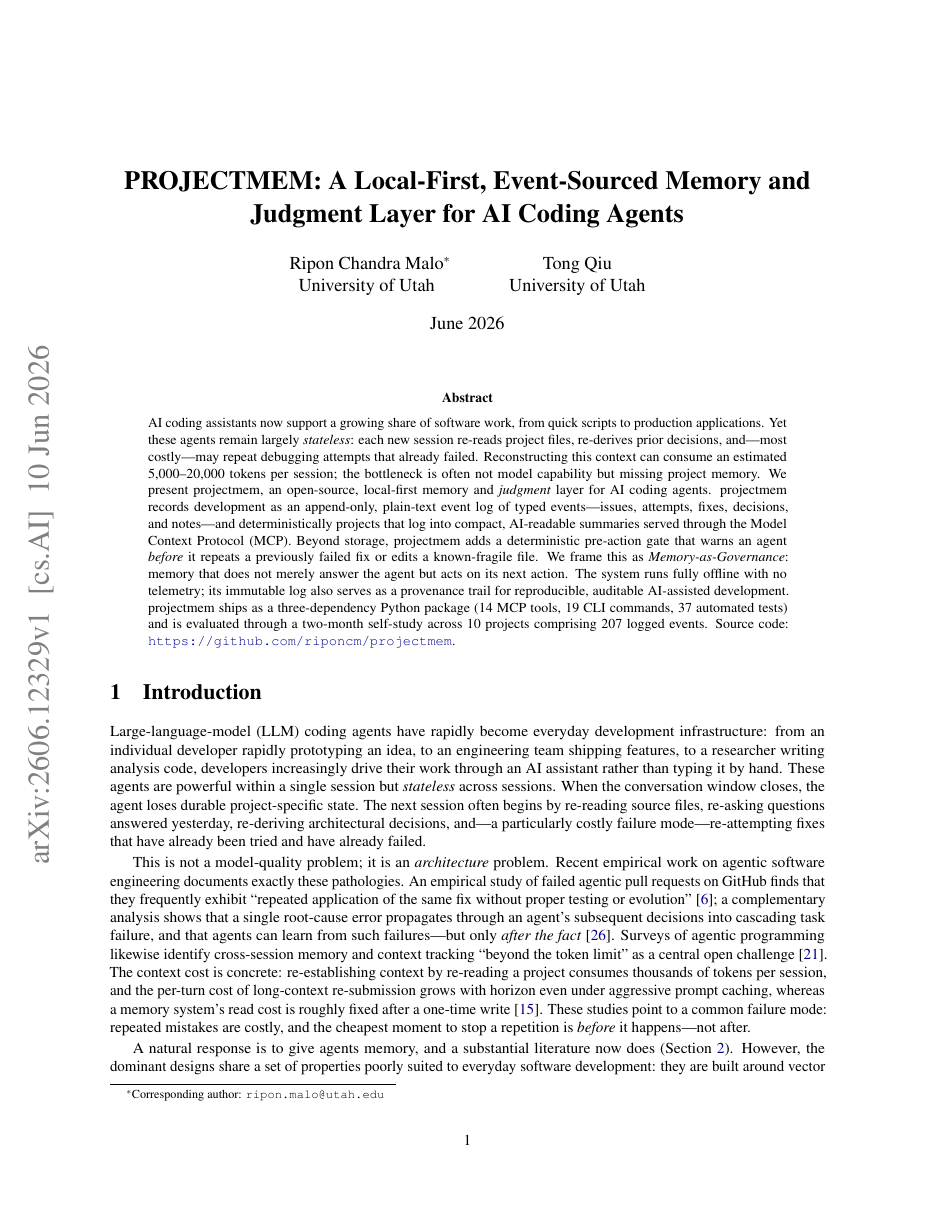
PROJECTMEM: A Local-First, Event-Sourced Memory and Judgment Layer for AI Coding Agents15arxiv.org原文 ↗
projectmem 关注 coding agent 的跨会话失忆:每次重读文件、重推决策、重复失败尝试会消耗 5,000-20,000 tokens。系统用 append-only plain-text event log 记录 issues、attempts、fixes、decisions、notes,再确定性投影成 MCP 可读摘要;pre-action gate 会在 agent 准备重复失败修复或编辑脆弱文件前提示。实现是三依赖 Python 包,包含 14 个 MCP tools、19 个 CLI commands、37 个自动测试,并用 10 个项目两个月自用、207 个 logged events 做案例。它的重点不只是记忆检索,而是把记忆变成对下一步行动有约束力的治理层。
–
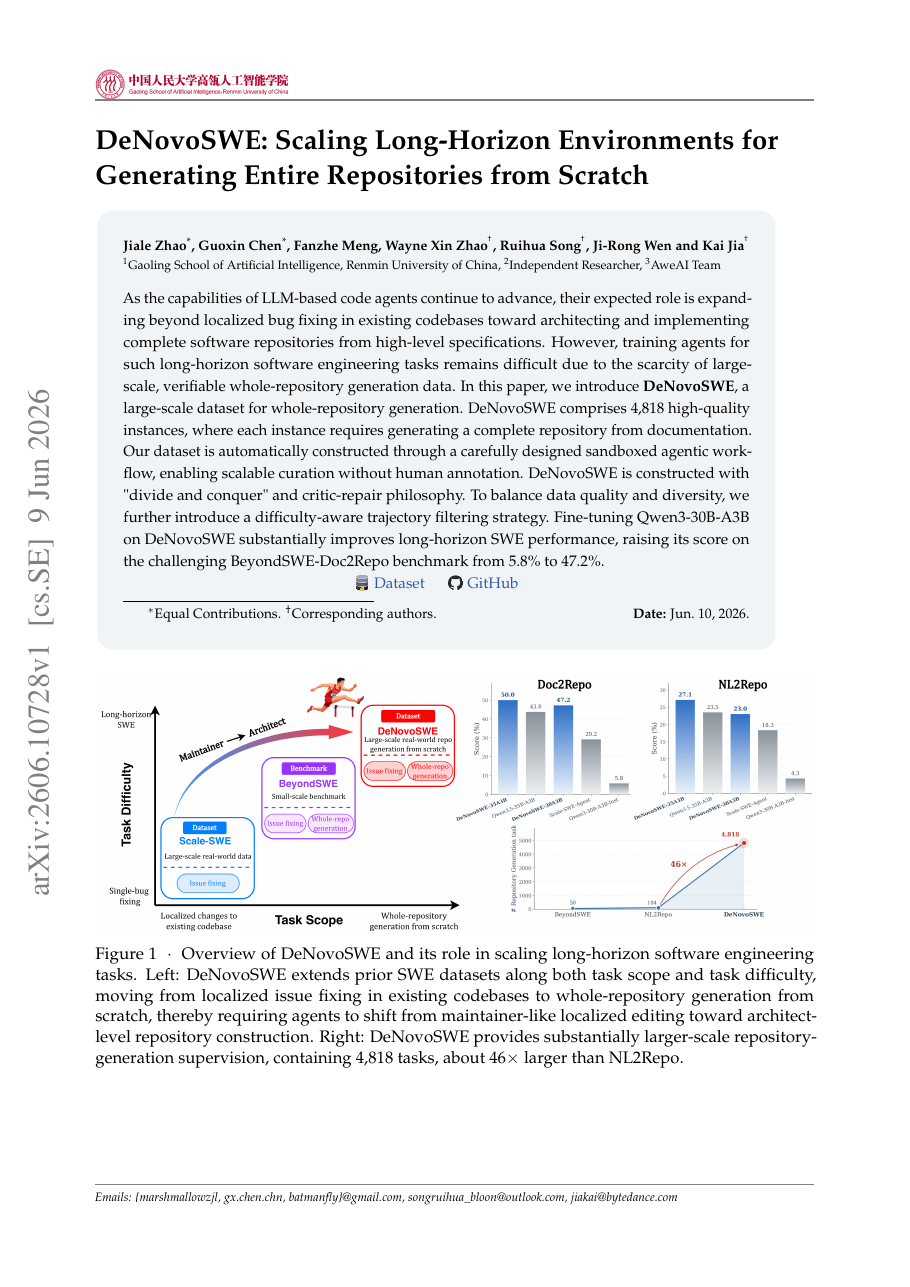
DeNovoSWE: Scaling Long-Horizon Environments for Generating Entire Repositories from Scratch16arxiv.org原文 ↗
DeNovoSWE 把软件工程 agent 的目标从修 bug 扩展到从文档生成完整仓库。数据集包含 4,818 个 whole-repository generation 实例,通过沙箱化 agentic workflow 自动构建,流程采用 divide-and-conquer、critic-repair,并用 difficulty-aware trajectory filtering 平衡质量和多样性。用 DeNovoSWE 微调 Qwen3-30B-A3B 后,BeyondSWE-Doc2Repo 从 5.8% 提升到 47.2%。这条结果表明长程 SWE 训练数据可以从 agent 自举工作流规模化生产,但也把评估重点推向“完整仓库是否可运行、可验证”。
–
开源 / 项目 · Projects
12 项 · 开源 / 项目
Homebrew 6.0.017brew.sh原文 ↗
brew.sh
Homebrew 6.0.0 是一次偏基础设施和安全边界的发布,变化包括 tap trust、安全机制、Linux sandboxing、内部 JSON API 和 macOS 27 初始支持。它不是单个功能更新,而是把包源信任、跨平台行为和内部 API 稳定性进一步产品化。对依赖 Homebrew 的开发环境而言,这类发布的影响通常出现在 CI、bootstrap script、tap 管理和企业镜像策略里。
–
Open Reproduction of DeepSeek-R119github.com原文 ↗
Hugging Face open-r1 是 DeepSeek-R1 的开放复现实验仓库,包含 SFT、GRPO 和 synthetic data generation 脚本,并用 Makefile 串起训练、生成、评测流程。项目计划按三步推进:复现 R1-Distill、复现 R1-Zero 的纯 RL 管线、展示 base model 到 RL-tuned 的多阶段训练。README 记录 Step 1 已发布 Mixture-of-Thoughts,包含 350k verified reasoning traces,另有 10k CodeForces problems 和 100k solutions 的蒸馏数据。它的工程价值在于把“复现 reasoning model”拆成可执行 recipes,而不是只发布权重或论文。
–
Boo20github.com原文 ↗
Boo 是用 Zig 写、基于 libghostty-vt 的 screen 风格终端复用器。它把 session 输出交给 Ghostty 终端仿真核心解析,因此能保存屏幕内容、样式、光标、scrollback 和 terminal modes;`peek` 返回的是重建后的屏幕状态,不是原始字节日志。README 还给出 agent-friendly automation loop:`new -d` 启动 headless session,`send` 输入命令,`wait --idle` 等输出稳定,`peek --scrollback` 读屏幕。这个项目的亮点不是又做一个 tmux,而是为 AI agent 驱动 TTY 程序提供更可靠的观测表面。
–
Plannotator21github.com原文 ↗
Plannotator 是本地浏览器式 review surface,用来标注 agent 的计划、spec、Markdown、HTML、diff 和 PR,并把批注反馈回 agent。它集成 Claude Code、Codex、Copilot CLI、Gemini CLI、OpenCode、Kiro、Amp、Pi 等,Codex 侧通过 hook/skills 接入,计划模式中可自动打开 review 页面。分享模型也考虑了隐私:小计划编码在 URL hash;大计划用浏览器端 AES-256-GCM 加密后上传短链,服务端只存密文并 7 天自动删除。它填的是人类审阅 agent 计划和代码变更时缺少“可点、可批注、可回传”的交互层。
–
AVP22github.com原文 ↗
Agent Vault Proxy 用 loopback HTTPS proxy 做 just-in-time secret substitution,让 agent 进程只看到占位 API key。真实 key 在请求出站前才从 Bitwarden Secrets Manager 获取并注入,调用进程地址空间、日志或 prompt-injection 输出里都不应出现真实 secret。README 细节相当安全工程化:按 host/method/path binding 做 fail-closed,支持 systemd hardening,审计写入本地 `audit.jsonl`,Docker 路径还明确要求 agent UID 不能有 docker daemon 权限。它不是“把 key 放另一个 env var”,而是把 secret 暴露窗口缩到网络边界最后一跳。
–
Remuda23github.com原文 ↗
Remuda 是 AI-assisted development 的 CLI 编排工具,围绕 disposable working copies、多 agent 启动、容器化运行、prompt snippet 复用和 Jira/Slack 上下文注入来降低委派成本。README 解释它默认把 workspace 放在 `~/.remuda/repos`,也支持 TUI wizard,并能向 agent swarm 广播消息。它的设计假设是 coding agents 最适合异步管理,开发者一次性把多个小任务分发出去,再回收结果。这个项目把“多 agent”落在工作目录、终端会话、上下文拼装这些普通但耗时的胶水工作上。
–
AgentStore24github.com原文 ↗
AgentStore 是自托管 datastore,用于 AI agent 团队共享状态与数据。它指向一个清晰工程问题:多个 agent 或多轮 agent workflow 不能只依赖各自上下文窗口保存协作状态。把共享状态独立成 datastore 后,团队可以把任务进度、外部数据、判断结果和中间产物放在可控存储层,而不是在 prompt 中反复搬运。它适合被看作 agent team infrastructure 的一块,而非单纯数据库包装。
–
Kikubot25github.com原文 ↗
Kikubot 把电子邮件当成多 agent 消息总线:每个 agent 是一个 inbox,每个容器轮询一个 IMAP mailbox,把新邮件送入 LLM agentic loop,再通过 SMTP 回复。README 的理由很具体:邮件线程天然携带 `References`/`In-Reply-To` 历史,账号提供身份、ACL 和 durability,组织里的人也无需学习新 UI。它支持 coordinator 和 specialist agents 共用一个 mail server 互相发信协作,并用容器隔离 agent 运行环境。这个项目有趣之处在于它没有发明新协议,而是把最保守的企业通信系统改造成 agent fabric。
–
Mimirs26github.com原文 ↗
Mimirs 是给 AI coding agent 的本地 MCP 记忆服务,使用 Bun 和 SQLite,强调无 API key、无云、无 Docker。它提供 semantic search、auto-generated wiki、cross-session memory、dependency graphs 和 annotations,并支持 Claude Code、Cursor、Windsurf、Copilot、JetBrains、Codex 等 MCP client。README 给出一个项目上的案例:典型 prompt 从 380K tokens、约 12 秒,降到 91K tokens、约 3 秒,下降 76%。它把“让 agent 少 grep、少猜文件名、少重读上下文”变成可安装的本地索引层。
–
Flightdeck27github.com原文 ↗
Flightdeck 是自托管的 AI agent observability 和 control plane,面向 production agents 与 coding agents。它把 LLM calls、MCP events、tool calls 流式送入 dashboard,提供 per-agent timeline、fleet-wide feed、events search、run inspection、analytics、token policy enforcement 和 MCP allow/block policy。生产 agent 用 `flightdeck-sensor` 的 `init()+patch()` 接入,覆盖 Anthropic/OpenAI SDK、LiteLLM、LangChain、LangGraph、LlamaIndex、CrewAI 等;Claude Code 则通过插件接入。这个项目把 agent 观测从“看日志”推进到可按 agent、事件类型、模型、MCP server 和成本切片的运维界面。
–
Llmbuffer28github.com原文 ↗
上下文工程系统·基础设施
llmbuffer 是 Python conversation history buffer,核心是把消息顺序调整为可稳定命中 provider prompt cache 的结构:static system prompt、long-lived history、dynamic context、recent messages。RAG 结果、时间戳和当前工具调用等易变内容被放在末尾,避免破坏前缀缓存;long-lived history 超预算时可用 compaction hook 处理。README 的 15 turn Anthropic 定价模拟里,llmbuffer cache hit ratio 为 85.3%,naive 为 66.1%,输入成本从 0.028 美元降到 0.016 美元,约低 43%。它把“上下文管理”从截断策略扩展成缓存经济学问题。
–
行业动态 · Industry News
10 项 · 行业动态MiMo Code is now released and open-source29mimo.xiaomi.com原文 ↗
mimo.xiaomi.com
小米发布并开源 MiMo Code,定位为面向代码任务的模型和工具链。这条的实质是 MiMo 系列继续向 coding 和 agent workflow 延伸,把模型能力和开发者工具链一起交付,而不是只提供 API。对于国内大模型生态,这类发布也显示厂商正在用开源 code model 争夺开发者入口。
–
DiffusionGemma: 4x Faster Text Generation30blog.google原文 ↗
blog.google
Google 发布 DiffusionGemma,一个 Apache 2.0 的 26B Mixture-of-Experts 实验开放模型,推理时只激活 3.8B 参数。它用文本 diffusion 一次生成 256-token block,再迭代 refine,而不是自回归逐 token 解码;Google 称专用 GPU 上最高 4x faster,单 H100 超过 1000 tokens/s,RTX 5090 超过 700 tokens/s。文章也明确写出 trade-off:质量低于标准 Gemma 4,更适合低到中 batch、本地交互、inline editing、code infilling 等 latency-sensitive 场景。它的重要信息不是“扩散生成替代 LLM”,而是低并发本地推理的硬件利用方式开始分叉。
–
Anthropic requires 30 day data retention for Fable and Mythos31support.claude.com原文 ↗
support.claude.com
Anthropic 对 Mythos-class models 要求 prompts 和 outputs 保留 30 天,用于 trust and safety,政策自 2026-06-09 生效。该更新影响已配置 zero data retention 的 Claude Console workspace、Claude Enterprise 的 Claude Code ZDR,以及通过 AWS Bedrock、Google Cloud Agent Platform、Microsoft Foundry 以 ZDR 访问的组织;普通 consumer plans 不因这条政策变化而改变。Anthropic 给出的理由是 Mythos 级能力可能被用于 cyber 和 bio 风险,某些滥用模式需要跨多请求聚合才能发现。它把高能力模型访问和 ZDR 承诺之间的冲突摆到了企业采购桌面上。
–
Cybersecurity researchers aren't happy about the guardrails on Anthropic's Fable32techcrunch.com原文 ↗
techcrunch.com
TechCrunch 报道多位安全研究者批评 Fable 的 cyber/biology guardrails 触发过宽。文章称 Fable 是公众可访问但受限的 Mythos 版本,遇到 guardrail 会暂停对话并提示安全措施标记了 cyber 或 biology topic;部分用户反馈读安全博客、写 secure code、甚至 code review 都可能被判定相关。报道还提到 Fable 命中 guardrail 后会 fallback 到 Claude Opus 4.8,安全专业人士可申请 Cyber Verification Program 获得较少限制。争议点不是 Anthropic 是否该防滥用,而是高能力安全模型若在正常 defensive workflow 中频繁降级,会削弱它对合法研究者的可用性。
–
German ruling declares Google liable for false answers in AI Overviews33the-decoder.com原文 ↗
the-decoder.com
慕尼黑地区法院认定 Google 对 AI Overviews 中的错误声明承担直接责任,因为 AI overview 被视为 Google 自己的内容,而不是普通搜索结果。案件中,AI Overviews 错误地把两家慕尼黑出版公司与诈骗、subscription traps 和可疑商业行为联系起来,且这些联系并不存在于引用来源中。法院强调 AI overview 会用自己的结构和语言生成独立陈述,Google 不能用“用户可以自己点来源核验”来免除责任。这个判决若被维持,将把搜索生成摘要从链接索引责任带入内容发布责任。
–
OpenAI to acquire Ona34openai.com原文 ↗
OpenAI 宣布计划收购 Ona,交易仍需常规 closing conditions 和监管批准,closing 前双方仍独立运营。OpenAI 表示 Ona 团队将在完成后加入 Codex 团队,推进 secure、persistent enterprise execution capabilities,帮助 Codex 更安全地进入生产工作流。公告列举的目标场景包括运行测试、修复 issue、现代化应用、处理漏洞和支持长时间复杂 workflow。它反映出 coding agent 竞争不只在模型,也在可信云工作区、持久环境和企业控制面。
–
BBVA puts AI at the core of banking with OpenAI35openai.com原文 ↗
openai.com
OpenAI 与 BBVA 披露其银行 AI 转型合作,关系从 2024 年向 3,000 名员工部署 ChatGPT Enterprise 开始,演进为围绕 “The Eight” 的银行端到端 redesign roadmap。OpenAI 称 BBVA 目前全球超过 100,000 名员工使用 ChatGPT Enterprise,是金融业最大规模 generative AI 企业采用之一。员工已创建 20,000 多个 custom GPT,其中约 4,000 个被频繁使用;秘鲁内部 assistant 将平均查询处理时间从约 7.5 分钟降到约 1 分钟。它提供了一个受监管行业规模化 AI adoption 的案例:许可、治理、培训、domain GPT 和业务流程重塑必须一起推进。
–
Investing in multi-agent AI safety research36deepmind.google原文 ↗
Google DeepMind 宣布投入 1000 万美元资助 multi-agent AI safety research。资助对象聚焦多智能体系统的安全,而不是单模型对齐或单 agent sandbox;这包括 agent 间协作、竞争、沟通、策略涌现和规模化部署中的风险。随着 coding、research、ops 场景越来越多地采用 agent swarm,多智能体安全从学术模拟题变成产品架构问题。该计划的意义在于把资金明确投向 agent interaction 层,而不是只关注单个模型的 refusal 或 reward model。
–
Solar generates more energy in US than coal for first time37theguardian.com原文 ↗
theguardian.com
The Guardian/Associated Press 报道 Ember 数据显示,2026 年 5 月美国太阳能发电量首次超过煤电。Solar 当月供应 12.8% 美国电力,coal 为 12.2%,后者是历史第四低月度占比;太阳能也成为当月美国第三大电力来源,仅次于天然气和核电。SEIA 与 Wood Mackenzie 还称,2026 年一季度 solar 和 battery storage 几乎是唯一大规模新增电源,合计占新增发电容量 91%。这条能源新闻与 AI 基础设施相关,因为美国电力需求正被 AI、制造业和电气化重新拉高,而新增容量结构会影响数据中心选址和电力采购。
–
Waymo Premier38waymo.com原文 ↗
waymo.com
Waymo Premier 是 Waymo 面向高频 robotaxi 用户推出的 premium membership。公开报道显示月费约 29.99 美元,权益包括 priority pickup、10% Waymo Cash back、提前进入新城市以及每月最多 5 次免费取消,初期面向 San Francisco、Los Angeles、Phoenix 等市场的部分用户。它标志 Waymo 在自动驾驶出行上开始测试类似航空/打车会员的需求分层,而不只是按单次 ride 收费。对 robotaxi 商业化而言,等待时间优先级和订阅收入可能比单公里技术指标更直接影响单位经济模型。
–
博客文章 · Blog Posts
8 项 · 博客文章
Building agents without harness engineering39rajitkhanna.com原文 ↗
Rajit Khanna 讨论的是一个反主流判断:与其继续扩大 agent harness,不如减少外部编排,把更多能力压到模型和工具接口本身。文章关注 harness engineering 的复杂度,包括计划、状态、重试、工具调用和外部控制逻辑如何越堆越厚。它值得放进今天的语境,是因为同一份日报里有 Archon、Claw-SWE-Bench、Flightdeck、Remuda 等大量 harness/observability 项目,这篇提供了相反方向的设计压力。不是所有 agent 可靠性问题都应该用更多框架层解决。
–
datasette-agent 0.2a040simonwillison.net原文 ↗
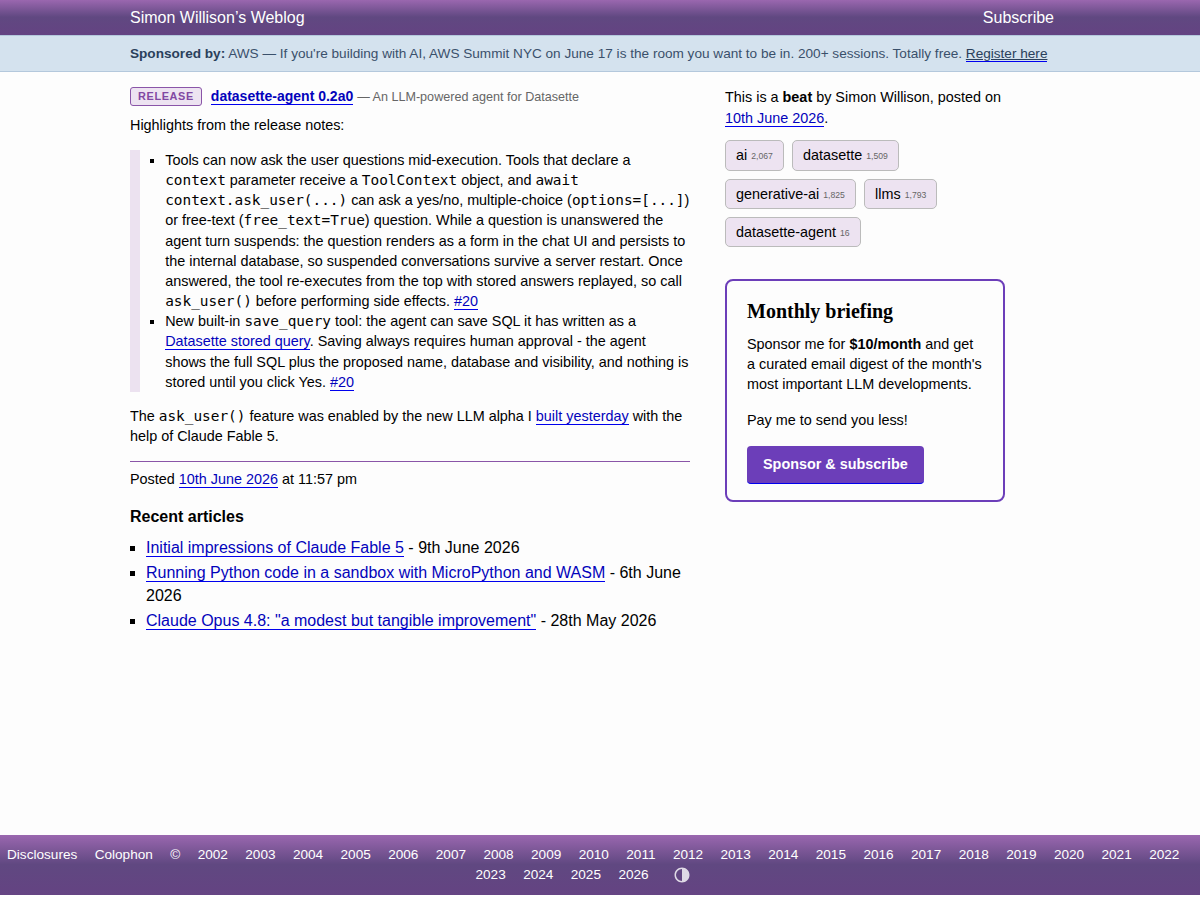
Simon Willison 发布 datasette-agent 0.2a0 alpha,新增了工具执行过程中向用户提问的机制。这个小改动很实用:agent 在访问数据、构造 SQL 或执行 Datasette 工具时,如果发现缺约束或需要确认,不必在工具链里硬猜,可以暂停并请求用户补充。它把 human-in-the-loop 从聊天层挪到 tool execution path 中,适合数据探索这种需求逐步澄清的工作。对 agent UI 来说,这比单纯“最终回答前再问”更贴近真实分析流程。
–
datasette 1.0a3341simonwillison.net原文 ↗
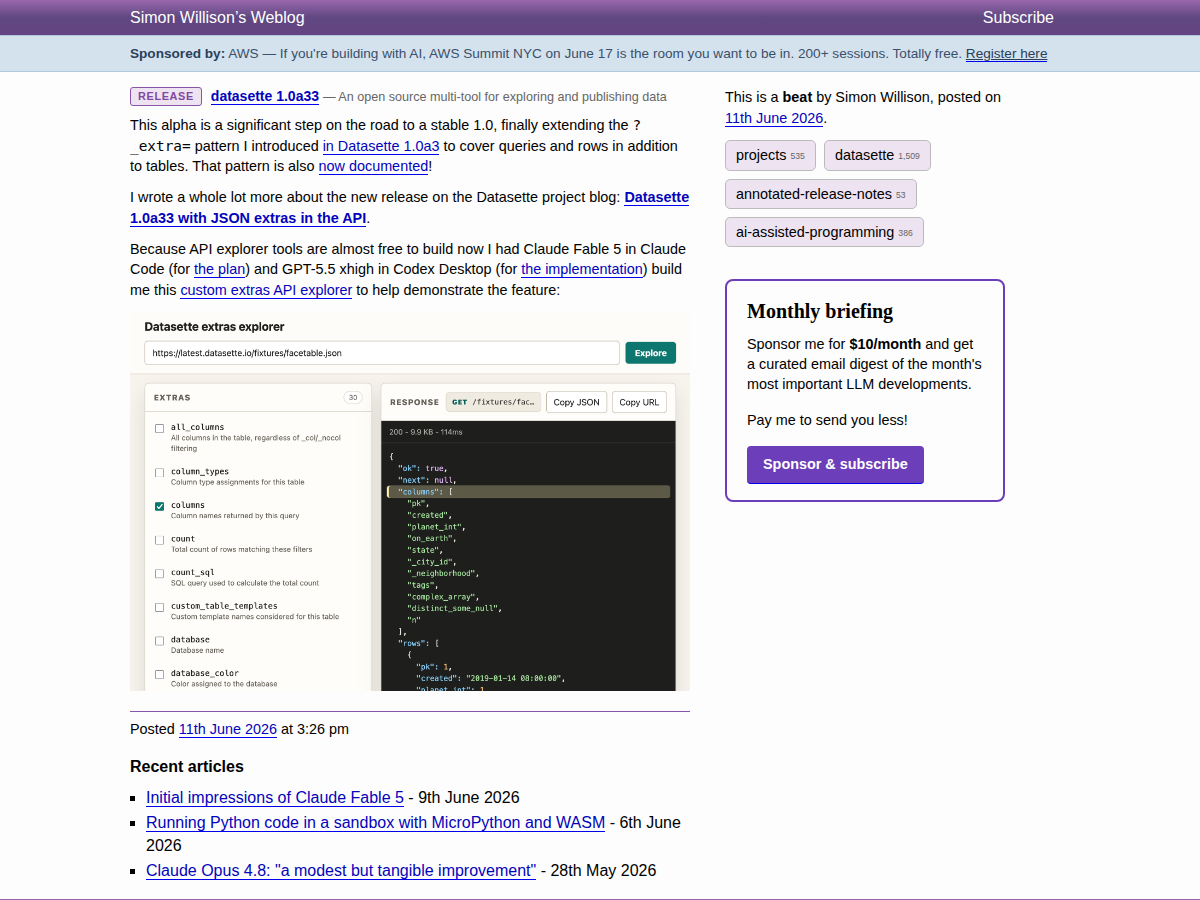
Datasette 1.0a33 扩展 JSON API 的 `_extra=` 模式,使其覆盖 queries 和 rows。这个变化面向自动化调用者:API client 可以直接请求附加结构化信息,而不必围绕查询结果再发额外请求或解析页面。它与 datasette-agent 放在同一天看更清楚,Datasette 正在把自己变成更适合 agent 和脚本消费的数据界面。对于小型数据工具,JSON API 的细节往往决定 agent 能否稳定构造、执行、解释数据操作。
–
asyncinject 0.742simonwillison.net原文 ↗
simonwillison.net
asyncinject 0.7 是一个 asyncio dependency injection 工具库更新,这版主要修复问题。它的位置比较基础设施:异步 Python 工具、agent helper、web handler 或 Datasette 插件常常需要把 client、config、cache、request-scope state 注入执行函数。轻量 DI 库若能保持小 API 和 async 语义清楚,就能减少测试与组合代码里的手写胶水。该条信息量不大,但可归入 Simon Willison 近期围绕小型 Python/agent 工具链的维护更新。
–
Anthropic Walks Back Policy That Could Have ‘Sabotaged’ AI Researchers Using Claude43simonwillison.net原文 ↗
simonwillison.net
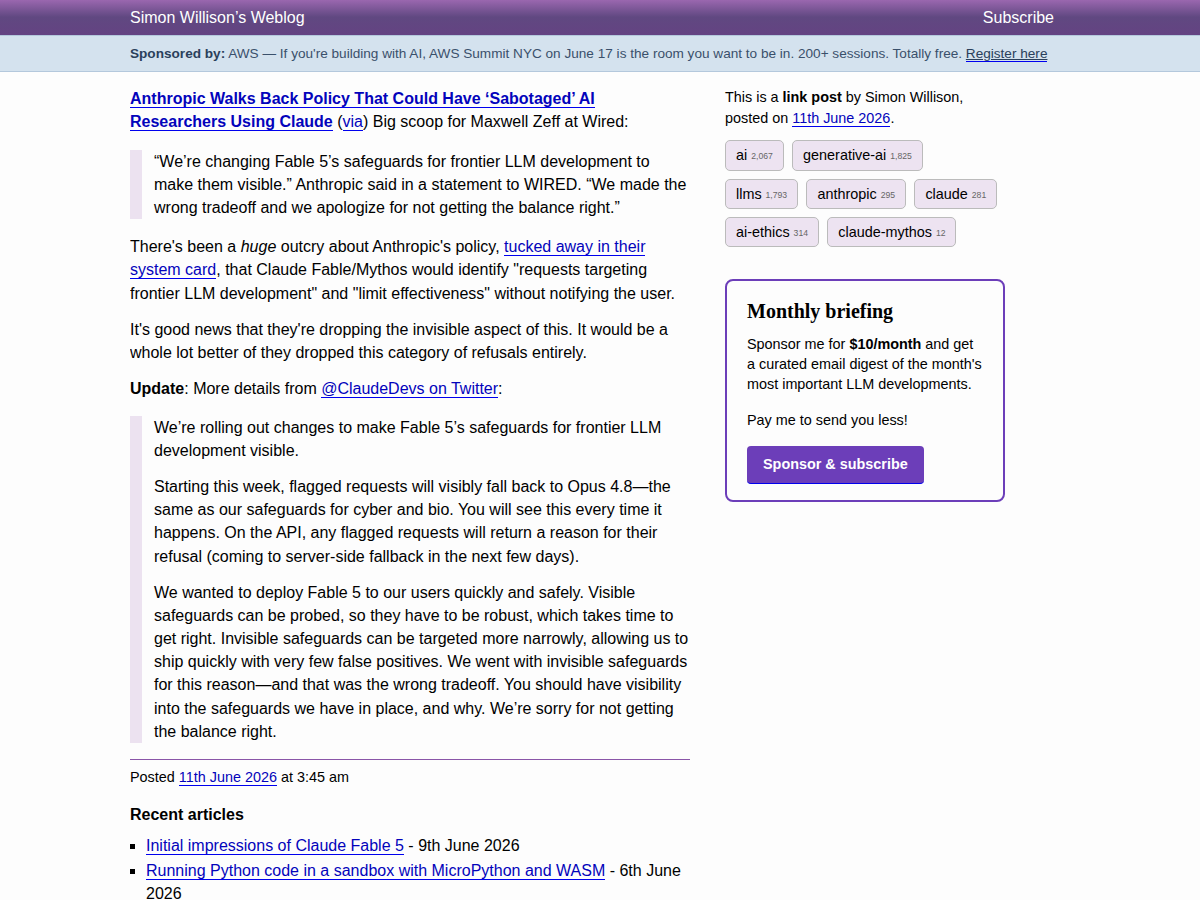
Simon Willison 摘要 Anthropic 调整 Fable 5 安全策略并让相关 guardrails 可见的事件。它和 TechCrunch 报道互相呼应:Fable/Mythos 级模型需要强防护,但过宽的 cyber guardrails 会让合法安全研究和代码审查 workflow 被误伤。“walks back” 与 “visible guardrails” 两个关键词说明,变化不只是后端策略调参,也涉及用户能否理解为何被拦。模型安全策略若不可见,研究者很难区分自己做错了什么、模型能力不足,还是产品策略在静默降级。
–
The Sequence Opinion: Systems of Record vs. Systems of Action44thesequence.substack.com原文 ↗
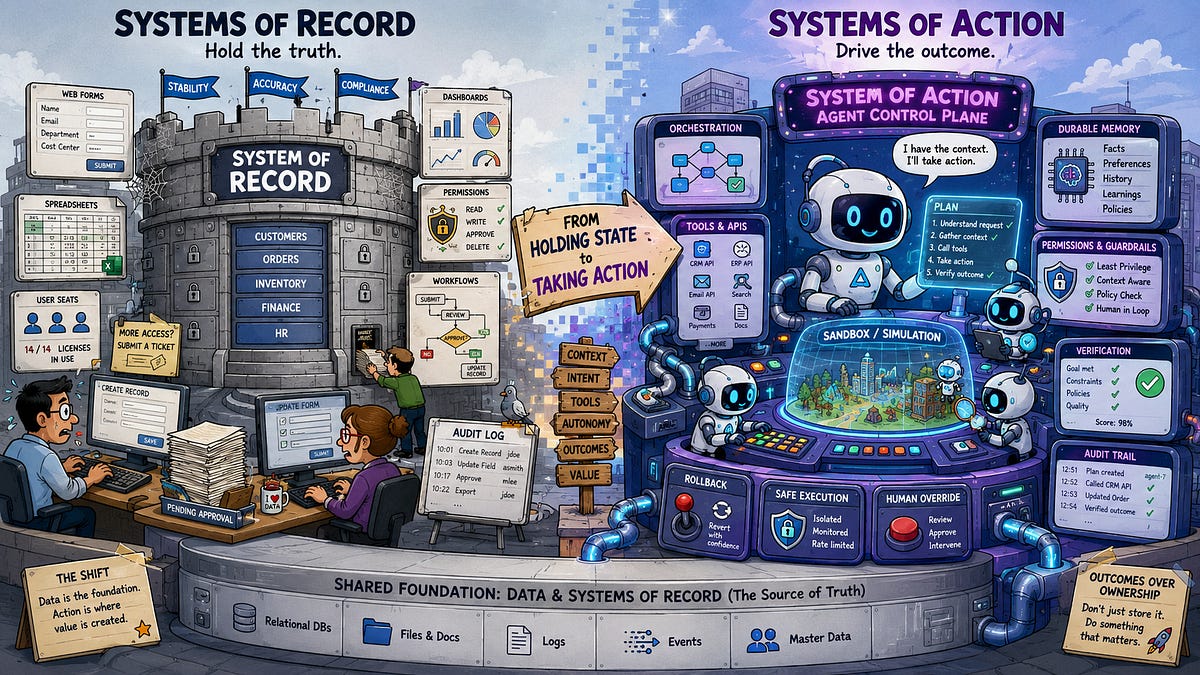
TheSequence 讨论 agentic AI 对企业软件分工的影响:传统系统保存事实,agentic 系统开始跨系统执行动作。“记录系统”和“行动系统”的区分很关键,因为 CRM、ERP、ticketing、warehouse 这些系统过去主要提供读写接口,AI agent 则会把它们串成可执行流程。这样一来,审计、权限、回滚和责任边界会比查询体验更重要。文章的价值在于把 agent 讨论从“能回答什么”拉回“谁被允许改变业务状态”。
–
Profiling in PyTorch (Part 2): From nn.Linear to a Fused MLP45huggingface.co原文 ↗
huggingface.co
Hugging Face 技术博客用 PyTorch profiling 讲从 `nn.Linear` 到 fused MLP 的优化过程。这是一篇实践型性能分析文章:先看 profiling 结果和 kernel/算子边界,再解释为什么融合 MLP 能减少 overhead,而不是直接给出 magic speedup。对于训练和推理工程,fused op 的收益通常依赖 batch、shape、硬件和框架调度,profiling 过程比结论更可迁移。它适合作为模型工程师排查 PyTorch 性能瓶颈的案例材料。
–


Lines of code got a better publicist46curlewis.co.nz原文 ↗
curlewis.co.nz
这篇文章讨论 lines of code 作为指标时的公共叙事变化。文章的核心不是 LOC 变成了好指标,而是 AI 编码时代更容易把“写了很多代码”包装成 productivity 证据。LOC 同时混合了需求规模、重复、生成冗余、维护负担和真实产出,很难单独解释工程价值。它提醒读者在看 AI coding demo、agent benchmark 或组织效率报告时,不要把行数增长自动等同于软件进展。
–
GitHub 热门 · GitHub Trending
12 项 · GitHub 热门本期重点pydantic/monty4github.com原文 ↗
Monty 是 Pydantic 团队用 Rust 写的最小安全 Python 解释器,目标是执行 LLM 生成的 Python 工具代码,而不启动完整容器。它通过外部函数控制文件系统、网络和环境变量访问,支持 typechecking、资源限制、stdout/stderr 收集、async/sync host calls,以及在外部函数调用点 snapshot 成 bytes 后 resume。README 称 startup 从 code 到 execution result 可低于 1 微秒,性能一般在 CPython 5x 快到 5x 慢之间,同时明确不支持完整 stdlib、第三方库和部分 Python 语法。它的核心判断是:agent code execution 需要的不是完整 Python,而是一个足够表达工具编排、边界极窄、可嵌入的执行器。
–
本期重点apple/container5github.com原文 ↗
github.com
Apple container 是用 Swift 编写、优化 Apple silicon 的 Linux container 工具,使用 lightweight virtual machines 在 Mac 上创建和运行容器。仓库结构包含 Sources、Tests、docs 和 VS Code example,说明它不是 demo wrapper,而是 Apple 正式开源的系统工具方向。它与 Docker Desktop 的差异点在于更贴近 macOS/Apple silicon 虚拟化栈,有望减少开发者在 Mac 上运行 Linux workload 时的额外抽象层。对本地 AI 和容器化开发来说,平台厂商亲自维护的 VM/container 路径会影响后续性能、权限和分发体验。
–
superradcompany/microsandbox47github.com原文 ↗
执行环境与沙箱系统·基础设施
Microsandbox 为 untrusted workloads 提供 fast local microVMs,README 明确列出 AI agents、user code、plugins、CI jobs、dev environments、scrapers 和 automation 等场景。它试图填补进程级隔离和远程沙箱之间的空档:本地启动、延迟低,但边界比普通子进程和容器更硬。随着 agent 越来越多执行用户代码、爬网页、跑脚本,本地 microVM 成为一种合理默认,而不是只在云端沙箱里出现。这个项目可与 Monty 对照:一个限制语言运行时,一个隔离整个 workload。
–
activeloopai/hivemind48github.com原文 ↗
Hivemind 自称 “One brain for all your agents”,为 Claude Code、OpenClaw、Codex、Cursor、Hermes、pi agents 提供 auto-learning、cloud-backed shared brain。仓库中有 claude-code、codex、openclaw、pi extension 等目录,说明它不是单客户端记忆插件,而是想跨 agent harness 共享记忆。它解决的是 agent 工具生态碎片化后的上下文割裂:同一项目、同一团队的经验不该被锁在某个 agent 的本地会话里。风险也同样明显,shared brain 会把权限、数据隔离和遗忘策略变成一等设计问题。
–
coleam00/Archon49github.com原文 ↗
Archon 定位为 open-source harness builder for AI coding,目标是让 AI coding deterministic and repeatable。它用 YAML workflow 定义 agent 流程,这意味着计划、步骤、工具和验证逻辑可以版本化,而不是散落在一次性 prompt 和聊天历史中。仓库包含 Docker、compose、AGENTS/CLAUDE 文档等,指向可部署的 harness 服务而非单文件脚本。它代表了今天另一个趋势:当模型能力提升后,工程团队开始把 agent 操作流程像 CI pipeline 一样固化。
–
google-labs-code/design.md50github.com原文 ↗
DESIGN.md 是一个给 coding agent 描述视觉身份和设计系统的格式规范。它把精确 design tokens 放在 YAML front matter,比如颜色、字体、字号、圆角、间距;再用 Markdown prose 解释设计意图和应用方式。README 的例子展示 agent 可以同时读到 `primary: #1A1C1E` 这样的机器值,以及“Architectural Minimalism meets Journalistic Gravitas”这样的风格语境。它抓住了前端 agent 的真实问题:只给截图或口头审美很难稳定复现,设计系统需要变成 repo 内的可读合约。
–
BerriAI/litellm51github.com原文 ↗
LiteLLM 是 OpenAI-compatible LLM gateway/SDK,覆盖 100+ 模型 API,并支持 cost tracking、guardrails、load balancing、logging。仓库描述列出的后端包括 Bedrock、Azure、OpenAI、VertexAI、Cohere、Anthropic、SageMaker、HuggingFace、vLLM、NVIDIA NIM 等。它的工程价值在于把多模型接入、预算控制、fallback 和审计统一到代理层,让应用侧尽量维持 OpenAI 格式。随着企业同时采购多家模型,LLM gateway 从便利库变成生产架构组件。
–
comet-ml/opik52github.com原文 ↗
Opik 是开源 LLM 应用观测、评测和调试平台,覆盖 RAG systems 与 agentic workflows。仓库描述强调 comprehensive tracing、automated evaluations 和 production-ready dashboards,这些能力对应 LLM 应用里最难排查的部分:检索输入、prompt、工具调用、中间输出和评测结果之间的因果链。它与 Flightdeck 的差异在于更偏 LLM app/RAG evaluation,全链路 experiment/debug/monitor 统一。对团队来说,Opik 的价值不只是看单次 trace,而是把质量回归和生产观察放到同一数据模型里。
–
junhoyeo/tokscale53github.com原文 ↗
可观测性与调试编码
Tokscale 是跟踪 AI coding agent token usage 和成本的 CLI/TUI 与 dashboard。README 列出支持 OpenCode、Claude Code、OpenClaw、Pi、Codex、Gemini、Cursor、AmpCode、Factory Droid、Kimi 等,并在 v2 中加入 native Rust TUI、跨平台支持、global leaderboard 和 2D/3D contribution graph。它把 agent 使用成本从账单后验拆到开发者日常反馈里。随着多 agent 并行和长上下文工具调用变多,token spend 需要像 CPU、CI minutes、cloud cost 一样被实时观察。
–
Michael-A-Kuykendall/shimmy54github.com原文 ↗
github.com
Shimmy 是纯 Rust WebGPU 推理引擎,提供 OpenAI API compatible 接口,原生支持 GGUF,并以 single binary、无 Python、无 llama.cpp 为卖点。它面向的是本地或边缘模型服务的另一条路线:使用 WebGPU 抽象跨 GPU,减少 Python runtime 和复杂依赖,同时保留 OpenAI API 兼容层给上层应用。它适合那些想把本地 GGUF 模型暴露成标准 chat/completions 接口的开发者。它的成败会取决于模型覆盖、性能稳定性和 WebGPU 后端成熟度。
–
RSSNext/Folo55github.com原文 ↗
github.com
Folo 是开源 AI RSS reader,README 描述为把 feed、curated lists 和 collections 整理到一个 timeline,减少 noisy feeds。它提供 AI-powered translation、summary、动态内容支持,并覆盖 browser、iOS、Android、macOS、Windows、Linux 等平台;仓库 AGPL-3.0,已有约 38.5k stars。它的技术方向不是重新发明 RSS 协议,而是在阅读器层加入 AI 整理、摘要和跨平台同步体验。对于信息工作流,Folo 更像“RSSHub 时代之后的个人信息控制台”。
–
gitbutlerapp/gitbutler56github.com原文 ↗
GitButler 是基于 Git 的版本控制客户端,用 Tauri、Rust 和 Svelte 构建,仓库已有 apps、crates、packages、e2e 等大型项目结构。它面向现代协作与 AI workflow,这一点与其长期主张的本地变更组织、虚拟分支和更细粒度 review 流程一致。AI coding 会让工作区同时出现多条未完成变更,传统单 working tree 和线性 branch 心智更容易混乱。GitButler 的位置是保留 Git 数据模型,同时给人和 agent 的并行改动提供更可操作的界面。
–
引用来源 · References
56 条 · 引用- 1 SparDA: Sparse Decoupled Attention for Efficient Long-Context LLM Inference. arXiv:2606.04511https://arxiv.org/abs/2606.04511 ↩ 回到正文 · back to text
- 2 ReVision: Scaling Computer-Use Agents via Temporal Visual Redundancy Reduction. arXiv:2605.11212https://arxiv.org/abs/2605.11212 ↩ 回到正文 · back to text
- 3 Grammar-Constrained Decoding Can Jailbreak LLMs into Generating Malicious Code. arXiv:2606.11817https://arxiv.org/abs/2606.11817 ↩ 回到正文 · back to text
- 4 pydantic/monty. GitHubhttps://github.com/pydantic/monty ↩ 回到正文 · back to text
- 5 apple/container. GitHubhttps://github.com/apple/container ↩ 回到正文 · back to text
- 6 Which Models Are Our Models Built On? Auditing Invisible Dependencies in Modern LLMs. arXiv:2606.12385https://arxiv.org/abs/2606.12385 ↩ 回到正文 · back to text
- 7 Adaptive Multi-Resolution Procedural Knowledge Compression for Large Language Models. arXiv:2606.12203https://arxiv.org/abs/2606.12203 ↩ 回到正文 · back to text
- 8 τ-Rec: A Verifiable Benchmark for Agentic Recommender Systems. arXiv:2606.10156https://arxiv.org/abs/2606.10156 ↩ 回到正文 · back to text
- 9 TRACE: A Unified Rollout Budget Allocation Framework for Efficient Agentic Reinforcement Learning. arXiv:2606.11119https://arxiv.org/abs/2606.11119 ↩ 回到正文 · back to text
- 10 POISE: Position-Aware Undetectable Skill Injection on LLM Agents. arXiv:2606.07943https://arxiv.org/abs/2606.07943 ↩ 回到正文 · back to text
- 11 Claw-SWE-Bench: A Benchmark for Evaluating OpenClaw-style Agent Harnesses on Coding Tasks. arXiv:2606.12344https://arxiv.org/abs/2606.12344 ↩ 回到正文 · back to text
- 12 Agentic Environment Engineering for Large Language Models: A Survey of Environment Modeling, Synthesis, Evaluation, and Application. arXiv:2606.12191https://arxiv.org/abs/2606.12191 ↩ 回到正文 · back to text
- 13 Organize then Retrieve: Hierarchical Memory Navigation for Efficient Agents. arXiv:2606.11680https://arxiv.org/abs/2606.11680 ↩ 回到正文 · back to text
- 14 Runtime Skill Audit: Targeted Runtime Probing for Agent Skill Security. arXiv:2606.11671https://arxiv.org/abs/2606.11671 ↩ 回到正文 · back to text
- 15 PROJECTMEM: A Local-First, Event-Sourced Memory and Judgment Layer for AI Coding Agents. arXiv:2606.12329https://arxiv.org/abs/2606.12329 ↩ 回到正文 · back to text
- 16 DeNovoSWE: Scaling Long-Horizon Environments for Generating Entire Repositories from Scratch. arXiv:2606.10728https://arxiv.org/abs/2606.10728 ↩ 回到正文 · back to text
- 17 Homebrew 6.0.0https://brew.sh/2026/06/11/homebrew-6.0.0/ ↩ 回到正文 · back to text
- 18 πFS. GitHubhttps://github.com/philipl/pifs ↩ 回到正文 · back to text
- 19 Open Reproduction of DeepSeek-R1. GitHubhttps://github.com/huggingface/open-r1 ↩ 回到正文 · back to text
- 20 Boo. GitHubhttps://github.com/coder/boo ↩ 回到正文 · back to text
- 21 Plannotator. GitHubhttps://github.com/backnotprop/plannotator ↩ 回到正文 · back to text
- 22 AVP. GitHubhttps://github.com/inflightsec/agent-vault-proxy ↩ 回到正文 · back to text
- 23 Remuda. GitHubhttps://github.com/yendo-eng/remuda ↩ 回到正文 · back to text
- 24 AgentStore. GitHubhttps://github.com/guyweissman/agentstore ↩ 回到正文 · back to text
- 25 Kikubot. GitHubhttps://github.com/mxaiorg/kikubot ↩ 回到正文 · back to text
- 26 Mimirs. GitHubhttps://github.com/TheWinci/mimirs ↩ 回到正文 · back to text
- 27 Flightdeck. GitHubhttps://github.com/flightdeckhq/flightdeck ↩ 回到正文 · back to text
- 28 Llmbuffer. GitHubhttps://github.com/scottpurdy/llmbuffer ↩ 回到正文 · back to text
- 29 MiMo Code is now released and open-sourcehttps://mimo.xiaomi.com/mimocode ↩ 回到正文 · back to text
- 30 DiffusionGemma: 4x Faster Text Generationhttps://blog.google/innovation-and-ai/technology/developers-tools/diffusion-gemma-faster-text-generation/ ↩ 回到正文 · back to text
- 31 Anthropic requires 30 day data retention for Fable and Mythoshttps://support.claude.com/en/articles/15425996-data-retention-practices-for-mythos-class-models ↩ 回到正文 · back to text
- 32 Cybersecurity researchers aren't happy about the guardrails on Anthropic's Fablehttps://techcrunch.com/2026/06/10/cybersecurity-researchers-arent-happy-about-the-guardrails-on-anthropics-fable/ ↩ 回到正文 · back to text
- 33 German ruling declares Google liable for false answers in AI Overviewshttps://the-decoder.com/landmark-german-ruling-declares-googles-ai-overviews-are-googles-own-words-and-makes-it-liable-for-false-answers/ ↩ 回到正文 · back to text
- 34 OpenAI to acquire Onahttps://openai.com/index/openai-to-acquire-ona ↩ 回到正文 · back to text
- 35 BBVA puts AI at the core of banking with OpenAIhttps://openai.com/index/bbva ↩ 回到正文 · back to text
- 36 Investing in multi-agent AI safety researchhttps://deepmind.google/blog/investing-in-multi-agent-ai-safety-research/ ↩ 回到正文 · back to text
- 37 Solar generates more energy in US than coal for first timehttps://www.theguardian.com/us-news/2026/jun/11/solar-energy-us-coal ↩ 回到正文 · back to text
- 38 Waymo Premierhttps://waymo.com/blog/2026/06/waymo-premier/ ↩ 回到正文 · back to text
- 39 Building agents without harness engineeringhttps://rajitkhanna.com/agents/ ↩ 回到正文 · back to text
- 40 datasette-agent 0.2a0https://simonwillison.net/2026/Jun/10/datasette-agent/#atom-everything ↩ 回到正文 · back to text
- 41 datasette 1.0a33https://simonwillison.net/2026/Jun/11/datasette/#atom-everything ↩ 回到正文 · back to text
- 42 asyncinject 0.7https://simonwillison.net/2026/Jun/11/asyncinject/#atom-everything ↩ 回到正文 · back to text
- 43 Anthropic Walks Back Policy That Could Have ‘Sabotaged’ AI Researchers Using Claudehttps://simonwillison.net/2026/Jun/11/anthropic-walks-back-policy/#atom-everything ↩ 回到正文 · back to text
- 44 The Sequence Opinion: Systems of Record vs. Systems of Actionhttps://thesequence.substack.com/p/the-sequence-opinion-systems-of-record ↩ 回到正文 · back to text
- 45 Profiling in PyTorch (Part 2): From nn.Linear to a Fused MLPhttps://huggingface.co/blog/torch-mlp-fusion ↩ 回到正文 · back to text
- 46 Lines of code got a better publicisthttps://curlewis.co.nz/posts/lines-of-code-got-a-better-publicist/ ↩ 回到正文 · back to text
- 47 superradcompany/microsandbox. GitHubhttps://github.com/superradcompany/microsandbox ↩ 回到正文 · back to text
- 48 activeloopai/hivemind. GitHubhttps://github.com/activeloopai/hivemind ↩ 回到正文 · back to text
- 49 coleam00/Archon. GitHubhttps://github.com/coleam00/Archon ↩ 回到正文 · back to text
- 50 google-labs-code/design.md. GitHubhttps://github.com/google-labs-code/design.md ↩ 回到正文 · back to text
- 51 BerriAI/litellm. GitHubhttps://github.com/BerriAI/litellm ↩ 回到正文 · back to text
- 52 comet-ml/opik. GitHubhttps://github.com/comet-ml/opik ↩ 回到正文 · back to text
- 53 junhoyeo/tokscale. GitHubhttps://github.com/junhoyeo/tokscale ↩ 回到正文 · back to text
- 54 Michael-A-Kuykendall/shimmy. GitHubhttps://github.com/Michael-A-Kuykendall/shimmy ↩ 回到正文 · back to text
- 55 RSSNext/Folo. GitHubhttps://github.com/RSSNext/Folo ↩ 回到正文 · back to text
- 56 gitbutlerapp/gitbutler. GitHubhttps://github.com/gitbutlerapp/gitbutler ↩ 回到正文 · back to text